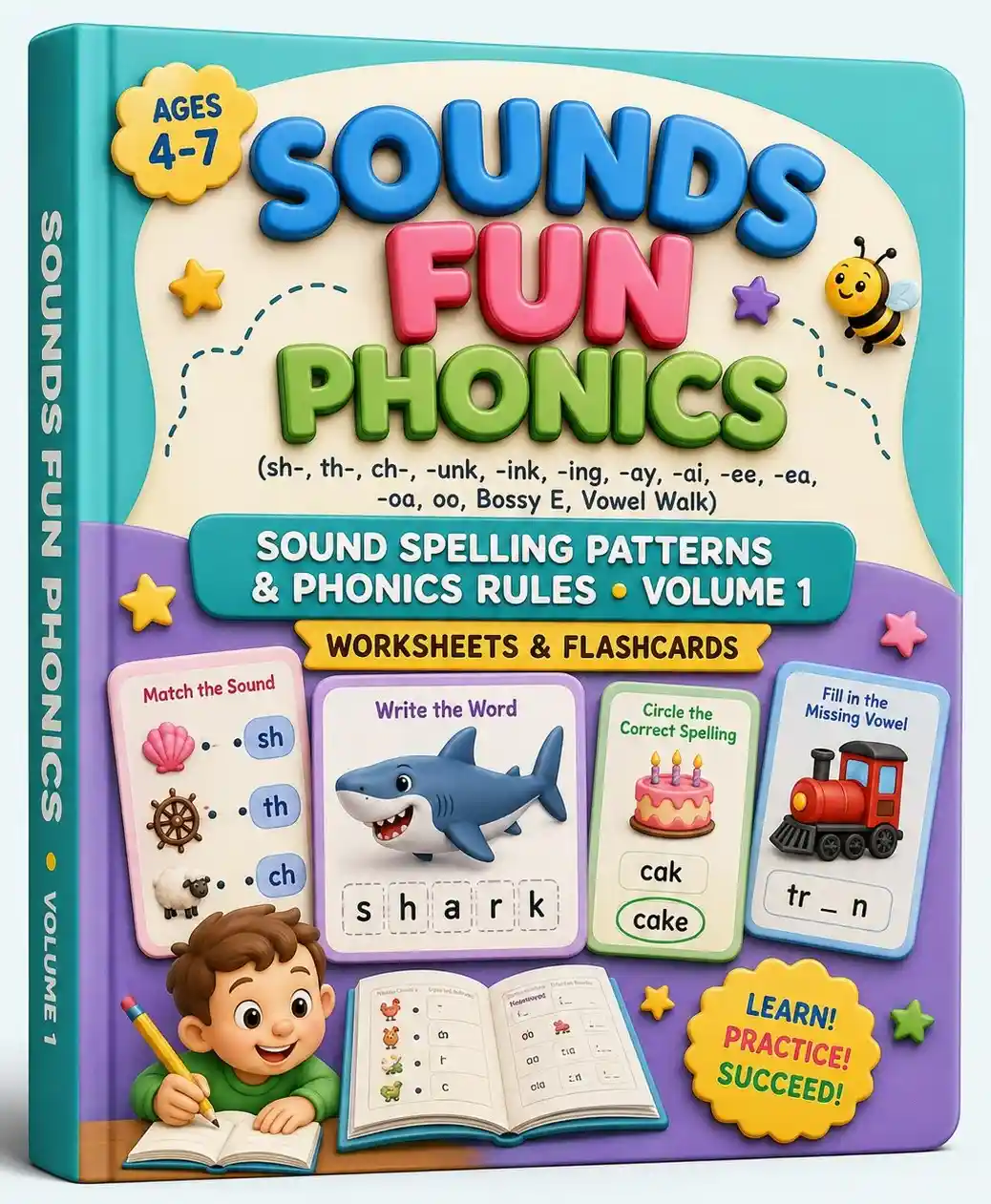
Sounds Fun Phonics-Workbook Vol 1 – A Fun Start to Early Reading Skills
Sounds Fun Phonics-Workbook Vol 1 is a practical learning resource designed to make early phonics practice simple, engaging, and enjoyable for young learners. Phonics is an important foundation for reading because it teaches children how letters and sounds work together to form words. With regular practice, children can gradually develop stronger reading, spelling, and pronunciation skills.
What Is Phonics?
Phonics teaches children to connect written letters with their corresponding sounds. For example, children learn that the letter B represents the /b/ sound in words such as “bat” and “bed.” As they become familiar with individual sounds, they can begin blending them together to read complete words.
A workbook such as Sounds Fun Phonics-Workbook Vol 1 can provide structured activities that allow children to practice these important skills step by step.
Build Strong Letter-Sound Recognition
Recognizing letters and remembering their sounds is one of the first steps in learning to read. Children need repeated exposure to letters before they can use them confidently.
Phonics workbook activities can encourage learners to identify letters, say their sounds, match pictures with beginning sounds, and complete simple exercises. These activities make learning more interactive than simply memorizing letters.
Practice Blending and Reading
Once children understand individual sounds, blending becomes an important next step. They can learn to combine sounds to read short words such as cat, sun, dog, and pen.
The Sounds Fun Phonics-Workbook Vol 1 can be incorporated into short daily sessions where children practice sounding out words and gradually increase their reading confidence.
Make Learning Fun
Young children often learn best when educational activities feel enjoyable. Colorful exercises, picture-based activities, tracing, matching, and simple word challenges can help maintain attention and make phonics practice less stressful.
Parents and teachers can also turn workbook activities into games. Asking children to find objects that begin with a particular sound or create new words from familiar letters can reinforce learning in a playful way.
Support Early Spelling Skills
Phonics is useful for spelling as well as reading. When children understand the relationship between sounds and letters, they can begin attempting to spell simple words independently.
Encourage children to say a word slowly, identify each sound, and then choose the letters that represent those sounds. This approach helps connect listening, speaking, reading, and writing.
Create a Simple Daily Routine
Short and consistent practice is often more effective than long study sessions. Parents can set aside 10–15 minutes each day for phonics activities, followed by reading a short story or practicing a few familiar words.
Using Sounds Fun Phonics-Workbook Vol 1 regularly can help children review previously learned sounds while gradually introducing new skills.
Final Thoughts
Sounds Fun Phonics-Workbook Vol 1 can be a useful addition to an early literacy routine. By combining letter-sound practice, blending, spelling, and enjoyable activities, children can develop essential skills for becoming confident readers.
With patient guidance and regular practice, phonics can become an exciting first step toward a lifelong love of reading.